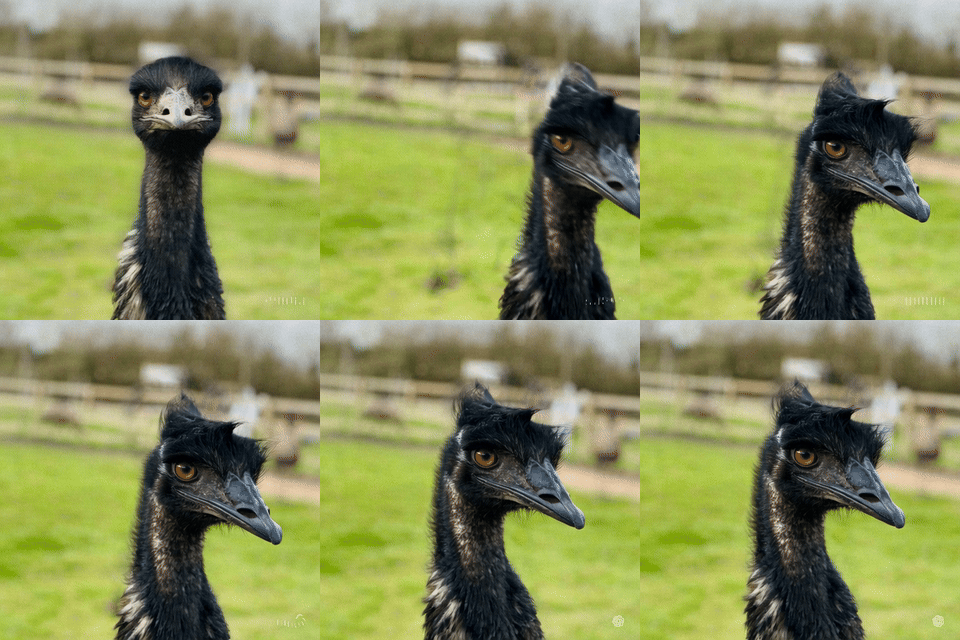
“Sure, we had the guns… but they had the tactics.” – Unknown
When Australia Fought Birds… And Lost!
If you ever find yourself lamenting a failed project, a bad investment, or a questionable life choice, just remember: in 1932, the Australian government went to war against a horde of large, flightless birds… and the birds won.
Yes, this is a true story. A real, government-sanctioned military operation—complete with soldiers, machine guns, and a strategic battle plan—was waged against an army of emus in the vast, unforgiving plains of Western Australia. The results were, shall we say, less than victorious for the human side. Welcome to the Great Emu War, where the feathered fiends reigned supreme.
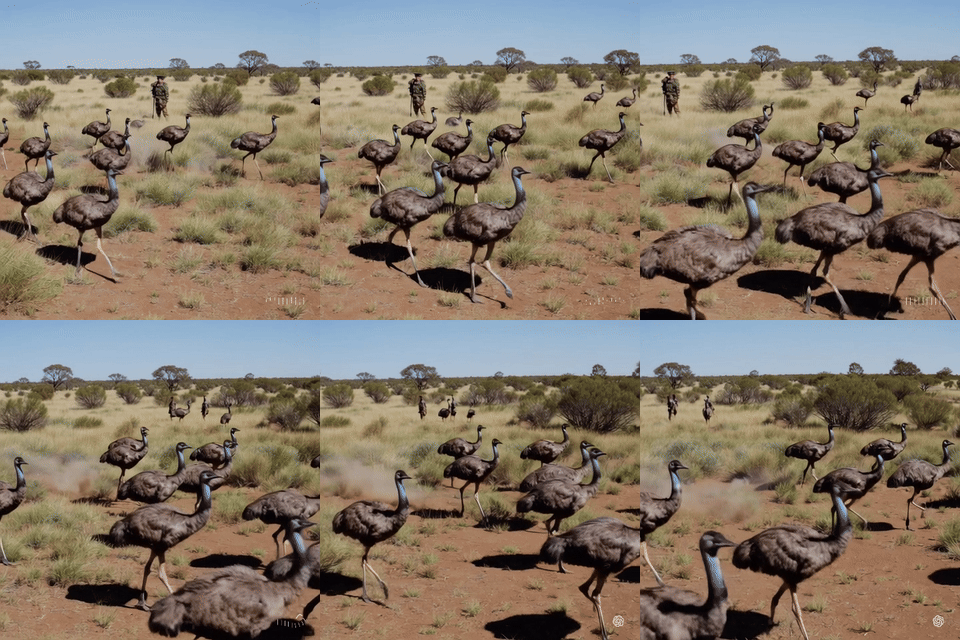
The Enemy: Emus
The flightless adversary, the emu is an Australian native, a six-foot-tall bird with the temperament of an annoyed traffic officer and the resilience of a cockroach in a nuclear wasteland. In the early 1930s, these birds were causing absolute chaos for struggling farmers in Western Australia [Smith, 2018]. Following World War I, returning soldiers had been given land to farm, and as the Great Depression set in, things were already tough. Then came the emus—thousands of them—trampling crops, knocking down fences, and generally making life miserable [Australian National Archives, 1932].
The farmers, understandably distressed, called upon the government for help. And in what can only be described as a massive overreaction, the government sent in the military.
Operation: Feathers of Fury
Armed with two Lewis machine guns and 10,000 rounds of ammunition, Major G.P.W. Meredith and his squad of soldiers were deployed to bring the emu menace to heel. What followed was one of the most bizarre military campaigns in history [Smith, 2018].
The first battle took place on November 2, 1932. The soldiers found a group of about 50 emus and opened fire. However, emus, being both fast and surprisingly strategic, scattered in all directions, making it nearly impossible to mow them down efficiently. The birds had accidentally mastered guerrilla warfare [Australian National Archives, 1932].
On November 4, the troops tried a new tactic: ambush. They set up near a dam where emus gathered for water. This plan initially seemed to work—until the gun jammed, allowing most of the birds to escape unharmed.
In a final act of desperation, the military mounted a machine gun onto a truck and chased the emus across the landscape. However, emus, unlike early 20th-century trucks, could actually handle the rugged terrain, and the whole attempt quickly fell apart [The Western Australia Farmers’ Association, 1933].

After a few weeks of exhaustion, the government threw in the towel. The emus had outmaneuvered, outrun, and outright outclassed their human foes. Major Meredith, in a rare moment of praise for the enemy, famously remarked that if the Australian military ever needed a tough force to fight in war, they should probably recruit emus [Johnson, 2006].
The official casualty count? A mere few hundred emus (out of the estimated 20,000), while the humans wasted thousands of rounds of ammunition, damaged their own equipment, and secured their place in history’s hall of bizarre failures [Australian National Archives, 1932].
Lessons Learned (Or Not)

In the end, the Great Emu War wasn’t just a military blunder; it was a cautionary tale of underestimating nature. The farmers eventually found success in protecting their crops not with machine guns, but with simple exclusion fences [The Western Australia Farmers’ Association, 1933]. Turns out, brute force isn’t always the answer.
Today, the Emu War is a beloved piece of Australian history, a reminder that even the best-laid plans can be undone by a bunch of stubborn, flightless birds. And if there’s one lesson we can all take from this: when life gets tough, channel your inner emu—be fast, be unpredictable, and never back down.
Emus Today: Thriving Against the Odds
Despite their infamous war with the Australian military, emus have not only survived but thrived. They are currently classified as a species of Least Concern by conservation authorities, meaning they are in no immediate danger of extinction. In fact, Australia’s emu population remains strong, thanks to vast open landscapes and legal protections. Emus are a key part of Australia’s ecosystem and continue to roam the outback, unbothered by human military ambitions [Smith, 2018].
Today, the Emu War is a beloved piece of Australian history, a reminder that even the best-laid plans can be undone by a bunch of stubborn, flightless birds. And if there’s one lesson we can all take from this: when life gets tough, channel your inner emu—be fast, be unpredictable, and never back down.
Enjoy your bird-watching… just don’t start another war!. 🦅🔭
If you want to watch a bit more on this:
References
- Johnson, M. (2006). The Great Emu War: Australia’s Most Bizarre Conflict. Melbourne University Press.
- Smith, A. (2018). Flightless Foes: The Emu War and Its Aftermath. Sydney Historical Society.
- Australian National Archives (1932). Records of the Emu War Operations.
- The Western Australia Farmers’ Association (1933). Reports on Agricultural Disruptions by Emus.
 BACK WHEN WE