
“I firmly believe that with the right footwear one can rule the world.” – Bette Midler
A Symbol of Power, Status, and Fashion Across Cultures.
Strut into a history lesson, darling, because high heels were never just about fashion—they were about flexing power. And surprise, surprise, they were originally a men’s game. From Persian warriors to Chinese and Indian nobility and European aristocrats, heels have played an important role in different cultures, evolving in function and meaning over the centuries.
Persian Warriors: The First Heeled Footwear (15th Century)

The earliest recorded use of heels dates back to 15th-century Persia, where they served a functional purpose for cavalry soldiers. Persian horsemen wore heeled boots to help secure their feet in stirrups, allowing them to maintain stability while riding and shooting arrows (Kronenburg, 2016). Unlike modern fashion heels, these were practical, ensuring better control and reducing the risk of slipping out of the saddle.
In 1599, when Persian emissaries visited Europe, aristocrats saw the look and said, “We need that,” seeing them as a marker of prestige and masculinity (Semmelhack, 2013). This encounter set the stage for heels becoming an elite fashion statement in European courts.
While Persian cavalry wore heels for functionality, China and Japan had their own forms of elevated footwear that were more culturally significant.
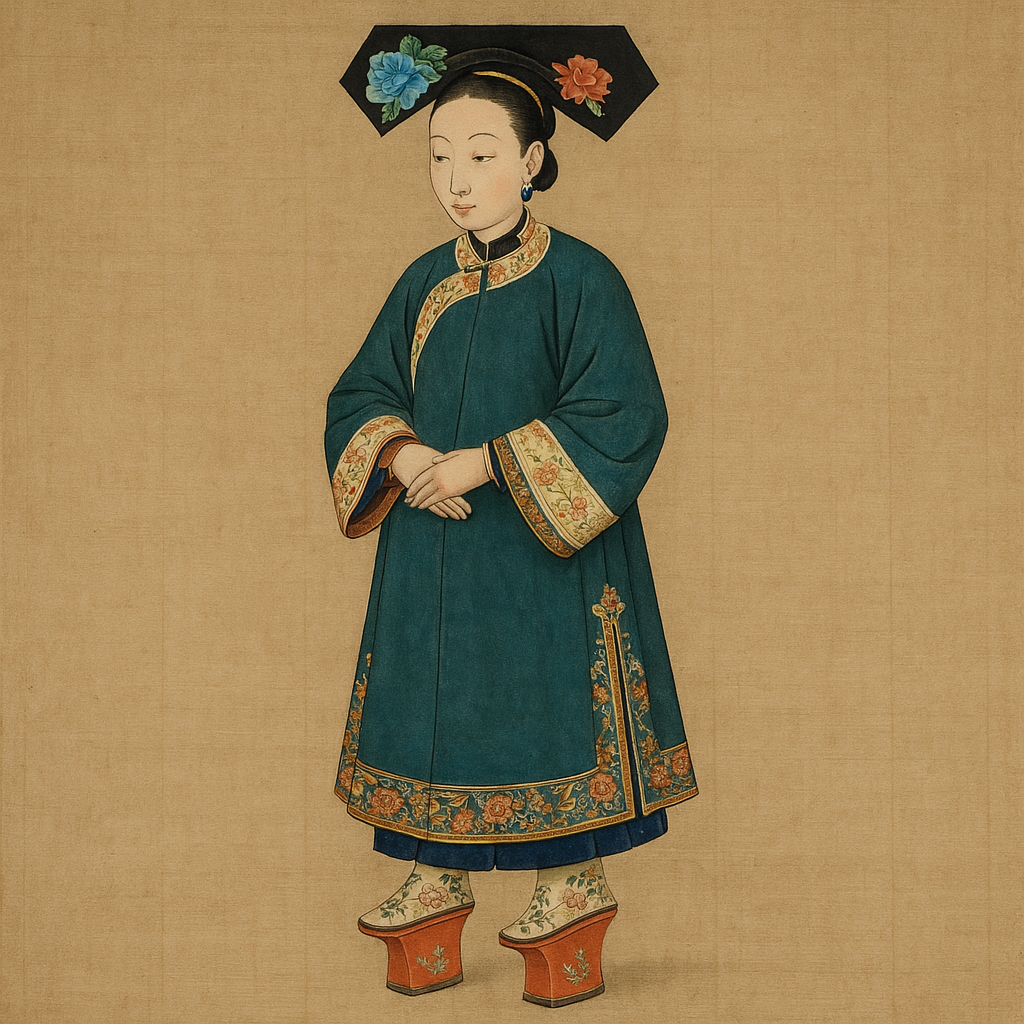
China: The Platform Shoes of Manchu Women (17th-19th Century)
During the Qing Dynasty (1644–1912), noble Manchu women wore “flower pot shoes”, which were platform shoes raised by a thick central heel (Evans, 2018). These shoes, often embroidered and ornately decorated, symbolized elite status and femininity. Unlike European high heels, they were worn primarily for aesthetic and cultural reasons rather than power.
Japan: The Elevated Geta and Okobo
In Japan, the “geta”, a type of elevated wooden sandal, dates back centuries and was worn by both men and women. The okobo, a high-platform wooden shoe worn by maikos (apprentice geishas), served both a functional and symbolic purpose, helping to keep kimono hems from getting dirty and signifying a woman’s training status (Dalby, 2001)
A Symbol of Nobility (17th-18th Century)
Fast forward to the 17th century, and European men—especially French royalty and aristocrats—were all about that heel game. The higher the heel, the closer to god… or, at least, to looking taller than the peasants.
Enter Louis XIV, a man who stood at 5 feet 4 inches (1.63 meters), made red-bottom heels a royal status symbol (yes, before Louboutins). His red-soled shoes were a not-so-subtle flex, and in 1673 he even banned non-nobles from wearing the, solidifying them as a symbol of aristocratic privilege (Semmelhack, 2013).

During this time, high-heeled shoes were also worn by men across England, Spain, and Italy, symbolizing wealth and social standing.
However, by the 18th century, men gradually abandoned heels, and they became more associated with women’s fashion. The French Revolution in 1789 saw a shift away from aristocratic extravagance, and flatter shoes became the norm for men, marking a significant turning point (Kunzle, 2004).
India: Heeled Footwear in Royal Fashion

While not as widely recognized in global fashion history, India’s Mughal rulers (16th-19th centuries) also had a tradition of ornate heeled footwear.
Historically, Indian nobility and religious figures wore “paduka”, an elevated wooden sandal with a heel or toe knob, often adorned with silver and gold (Ghurye, 1966). Though not the same as European high heels, these shoes symbolized wealth and religious devotion.
Mughal emperors and nobility also wore embroidered shoes with slightly raised heels, demonstrating status and craftsmanship. Some of these styles influenced traditional Indian footwear, such as mojari and juttis, which still feature slight elevation today.

Modern Evolution of Heels (19th-21st Century)
By the 19th century, heels had fully transitioned into women’s fashion, emphasizing elegance and beauty rather than power. However, they still played an essential role in social and gender norms throughout the modern era.
Key Developments in Heel Fashion:
- 1920s: Flapper-era heels with low, chunky heels became popular.
- 1950s: The invention of the stiletto heel transformed heels into a symbol of glamour and seduction, popularized by actresses like Marilyn Monroe.
- 1980s: Heels became a staple of power dressing, reflecting the rise of women in corporate and professional spaces.
- 2000s–Present: Heels now serve a variety of purposes, from fashion statements to workplace attire, with styles ranging from comfortable block heels to ultra-high stilettos.
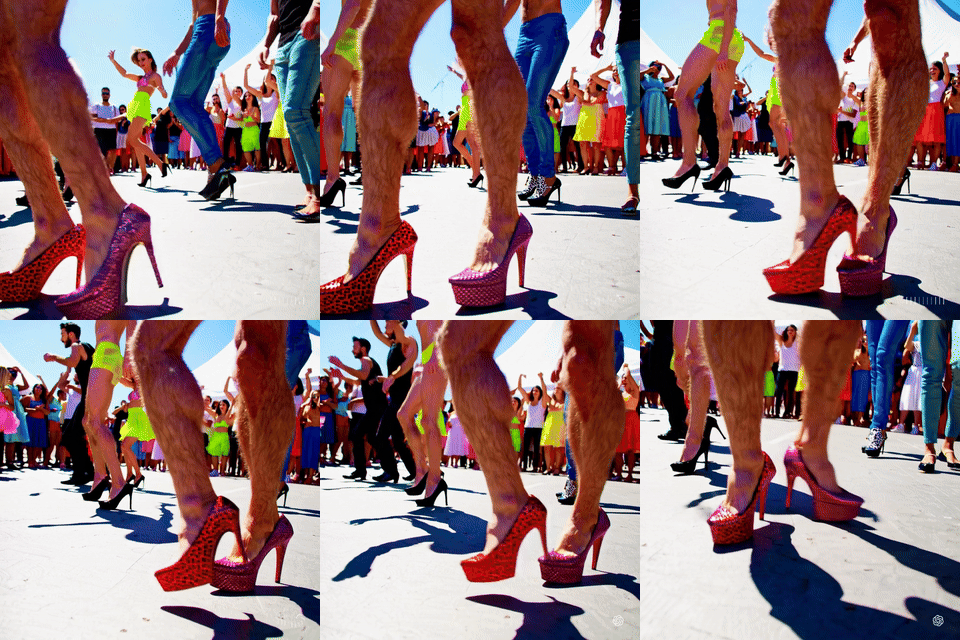
In recent years, there has even been a return of men wearing heels, particularly in pop culture and fashion.
Figures like Prince, David Bowie, and Billy Porter have reintroduced heels into men’s wardrobes, challenging gender norms and reclaiming their historical role.
The Legacy of High Heels
Today, they are more than just a fashion statement—they are a testament to history, status, and self-expression.
High heels were never just shoes, continuing to evolve, shaping and reflecting cultural identities worldwide, a step at a time. They have represented social hierarchy, gender roles, and personal expression across cultures; used as weapon, a flex, a fashion statement, and a power move. Whether on Persian warriors, French kings, or modern-day CEOs, they’ve always been about making an entrance.
So the next time you slip into a pair of heels, remember: you’re standing in the legacy of warriors, aristocrats, and rebels. Now go forth and strut like royalty. 👑💃
References
- Dalby, L. (2001). Geisha. University of California Press.
- Evans, C. (2018). Fashion and Its Social Agendas: Class, Gender, and Identity in Clothing. University of Chicago Press.
- Ghurye, G. S. (1966). Indian Costume. Popular Prakashan.
- Kronenburg, J. (2016). Shoes: Fashion and Fantasy. Thames & Hudson.
- Kunzle, D. (2004). Fashion and Fetishism: Corsets, Tight-Lacing and Other Forms of Body Sculpture. Sutton Publishing.
- Semmelhack, E. (2013). Heights of Fashion: A History of the Elevated Shoe. Princeton University Press.
- Teen Vogue. (2017). “High Heels Were Originally Meant for Men.” Link
 BACK WHEN WE