
“Tesla is here to stay and keep fighting for the electric car revolution.” – Elon Musk
Let’s jump start to the past
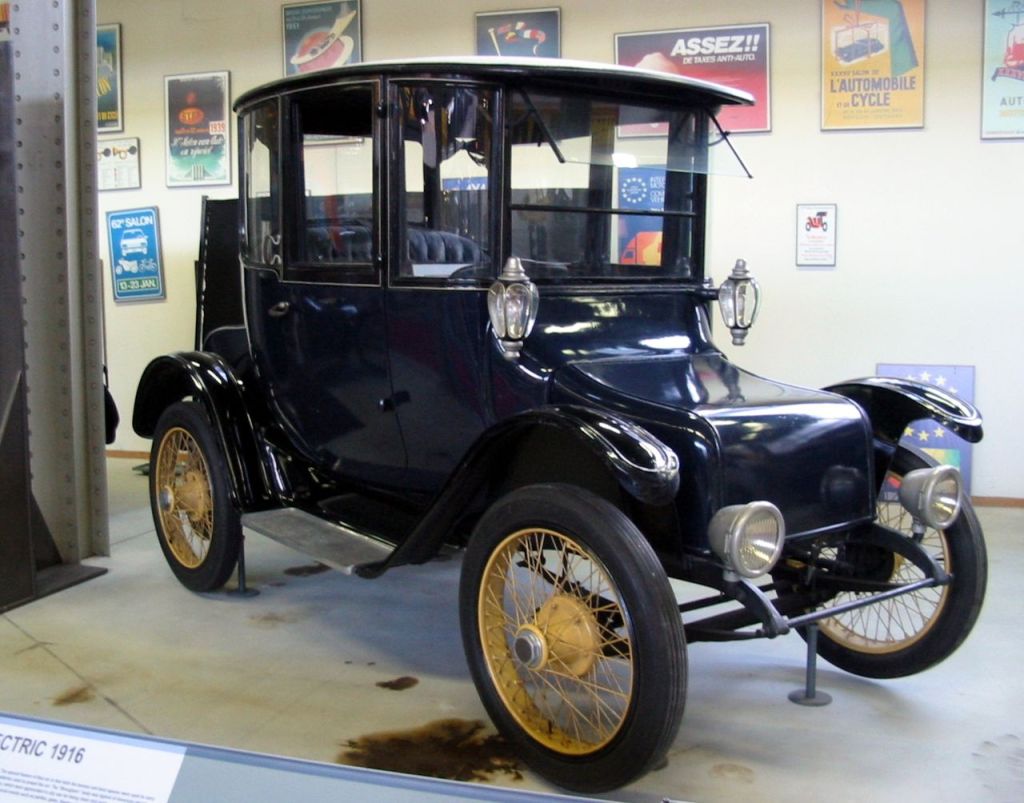

Electric vehicles (EVs) have been around much longer than most people realize. In fact, by the early 1900s, EVs were not only common—they were fashionable. Models like the Detroit Electric, Baker Electric, and Columbia Electric Runabout quietly zipped through city streets while their gas-powered rivals belched smoke and needed hand cranks. In 1912 alone, electric cars accounted for one-third of all vehicles on American roads, and even the likes of Thomas Edison and Clara Ford (wife of Henry) preferred them for their ease of use and quiet operation.
But when Henry Ford’s Model T brought gasoline cars to the masses at a fraction of the cost, and oil discoveries made gas cheap and plentiful, electric cars were pushed to the curb—for nearly a century.
Fast forward to the early 2000s, when a small group of engineers set out to bring EVs back—not as quirky throwbacks, but as sleek, high-performance machines. That company? Tesla Motors.
The Tesla Origin Story (2003–2008)

Tesla was founded in 2003 by Martin Eberhard and Marc Tarpenning, with the goal of building a high-performance electric sports car. At the time, most automakers dismissed EVs as slow, boring, and impractical. Tesla wanted to prove otherwise.
Their first car, the Tesla Roadster, used a Lotus Elise chassis and was powered by a lithium-ion battery pack—technology usually found in laptops. It could go from 0 to 60 mph in under four seconds, making it one of the fastest production cars of its time, electric or otherwise.
However, the company soon hit financial and technical roadblocks. Development costs ballooned. Production delays piled up. Eberhard was eventually pushed out by the board in 2007 amid growing internal tensions.
🚀 Elon Musk Takes the Wheel
Elon Musk joined Tesla in early 2004 as the lead investor, contributing $6.5 million of the company’s $7.5 million Series A round. He quickly became Chairman of the Board, but his influence didn’t stop there.
As delays and leadership disputes mounted, Musk stepped in more directly, and by October 2008, he was officially named CEO and product architect—a role he still holds today.
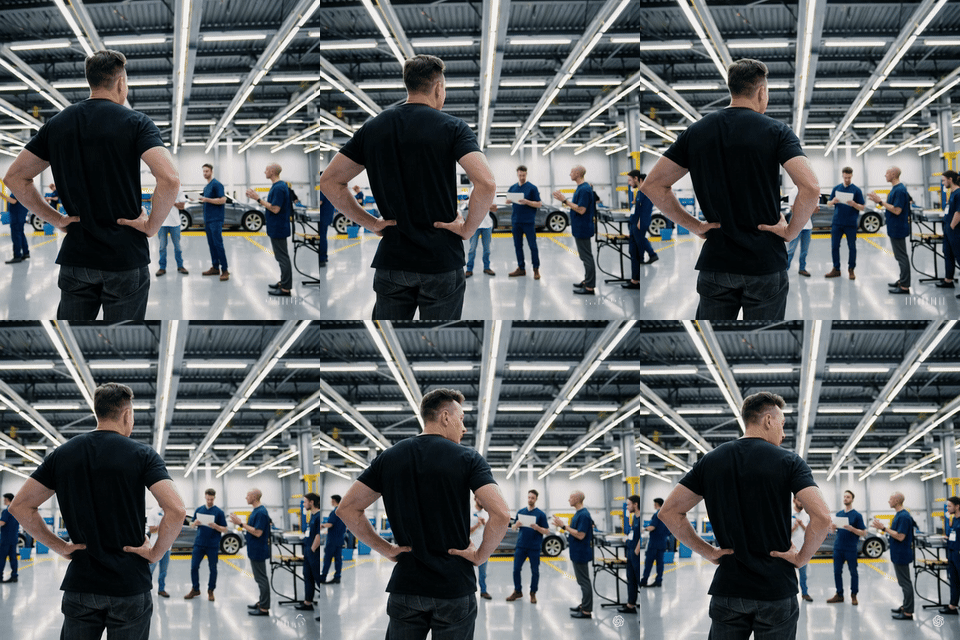
Musk didn’t found Tesla, but his takeover was driven by both necessity and vision: the company needed a lifeline, and Musk had both the cash and ambition to scale it far beyond niche sports cars.
⚙️ Growth, Struggles, and Breakthroughs (2008–2018)
The Tesla Roadster finally launched in 2008—but only about 2,450 units were ever made. The real breakthrough came in 2012 with the Model S, a luxury electric sedan that could outperform almost anything on the road. Reviewers raved. The Model S shattered preconceptions about EVs: it had long range, blistering speed, and sleek design.

Next came the Model X SUV (with its famously tricky falcon-wing doors), followed by the more affordable Model 3, launched in 2017. The Model 3 was Tesla’s attempt to become a mass-market automaker, and demand quickly skyrocketed—though not without production chaos and financial strain. Tesla nearly went bankrupt during the Model 3 ramp-up, but pulled through.
🔋 Tesla Today: Global Force, Tech Pioneer

Tesla is now one of the most valuable car companies in the world, with Gigafactories in the U.S., China, Germany, and Mexico. It has expanded into energy storage (Powerwall), solar energy, and AI-based autonomous driving.
The long-teased Cybertruck finally launched in late 2023, joining Tesla’s now-iconic lineup of S, 3, X, and Y models. Tesla also debuted the Semi, a fully electric truck aimed at transforming freight.
While Tesla faces growing competition—from legacy automakers like Ford and GM to Chinese EV giants like BYD—it remains a leader in innovation and brand influence.
⚡ The Bigger Picture: EVs and the Future
Tesla didn’t just build electric cars—it made them desirable, high-performance, and part of a larger vision for a sustainable energy future. EVs today are central to global decarbonization strategies:
- Zero tailpipe emissions help reduce urban air pollution
- Lower operating and maintenance costs save consumers money over time
- Integration with renewable energy (solar + storage) can reshape how we power our homes and cars
Still, challenges remain. Charging infrastructure is inconsistent. Battery raw materials raise ethical and environmental concerns. And Tesla’s own rollout of “Full Self Driving” has drawn regulatory scrutiny.
🛣️ What’s Next?
The future of EVs is bright—and increasingly competitive. Governments around the world are phasing out internal combustion engines, while new players flood the EV space. Yet Tesla, with its early-mover advantage, tech-forward reputation, and devoted customer base, remains at the center of the conversation.
That said, the road ahead isn’t without turbulence. Tesla’s public image has become closely intertwined with Elon Musk’s increasingly political presence, especially as he aligns more openly with Donald Trump’s second presidency. From regulatory friction to culture wars, Tesla now finds itself navigating not just technological and financial challenges—but ideological ones too. While some investors cheer Musk’s boldness, others worry that the company’s identity as a climate innovator could be muddied by partisan entanglements.
Still, Tesla has already reshaped the auto industry—and sparked a movement that’s bigger than any one personality or CEO tweet.
If the EV revolution had a spark, it was Tesla. And like all sparks—it set more than just wheels in motion. 🔌⚙️🔥📉📈
References
- Vance, A. (2015). Elon Musk: Tesla, SpaceX, and the Quest for a Fantastic Future.
- International Energy Agency (2023). Global EV Outlook
- BloombergNEF (2023). EV Market Forecast and Analysis
- U.S. Department of Energy. The History of Electric Vehicles
- SEC Filings & Tesla Investor Relations Reports (2004–2024)
- Politico (2024). “Musk’s Growing Influence in Washington”
- Reuters (2025). “Tesla and Trump: An Unlikely Alliance Shapes U.S. EV Policy”
- New York Times (2024). “Tesla’s Complicated Relationship with the Biden Administration”
 BACK WHEN WE