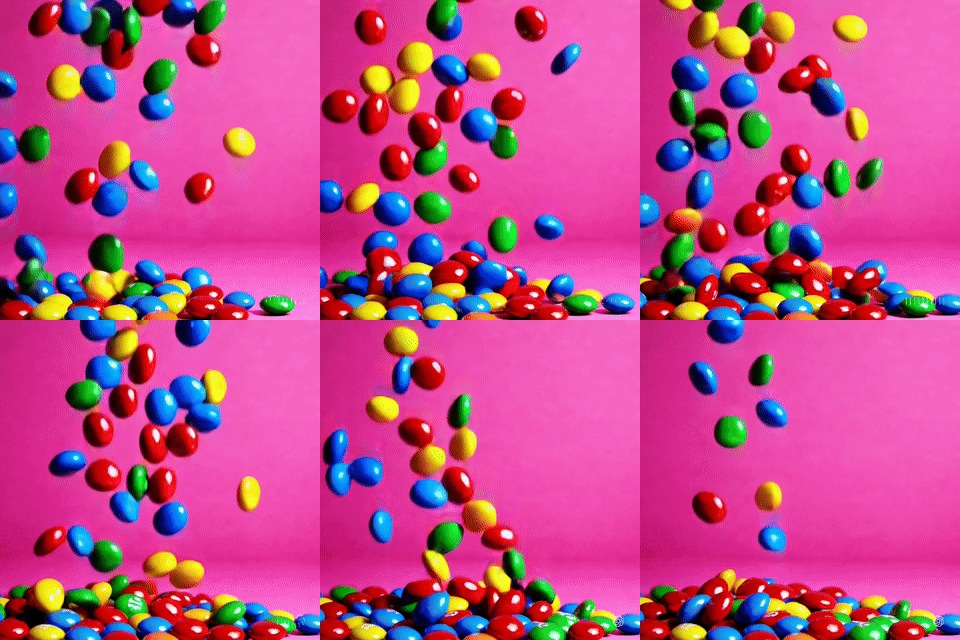
“The milk chocolate melts in your mouth — not in your hand.”
– Official M&M’s slogan since 1954
Back when M&M’s went to war and came back with attitude.
Before they were flicked into popcorn tubs during rom-coms or melted on TikTok taste tests, M&M’s were battlefield-grade survival tools in disguise. These tiny, colorful candies — which today come in flavors from Thai coconut to American pretzel — were once a war-born innovation designed to keep soldiers sane and chocolate stable in the sweaty chaos of combat.
This isn’t just the story of candy. It’s the story of how war, science, paranoia, and a pair of snarky mascots turned sugar into a global empire.
Melts in Your Mouth, Not in Your Foxhole
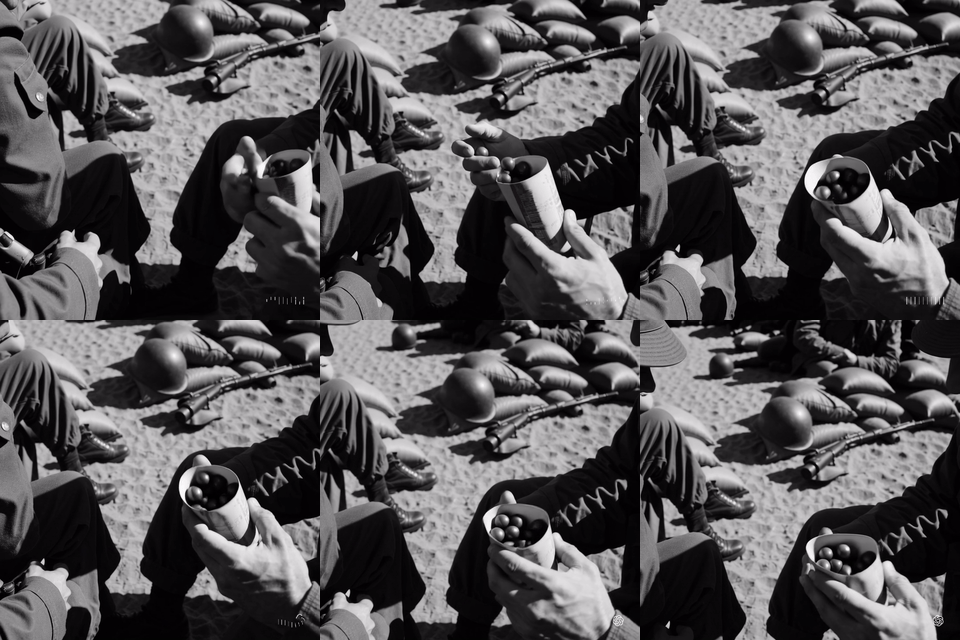
Our tale begins not in a kitchen but on the front lines of the Spanish Civil War, where Forrest Mars Sr. — son of Mars Inc. founder Frank Mars — noticed soldiers snacking on chocolate pellets coated in sugar shells. These candies didn’t melt in their hands, their packs, or their uniforms. That coating? A wartime miracle.
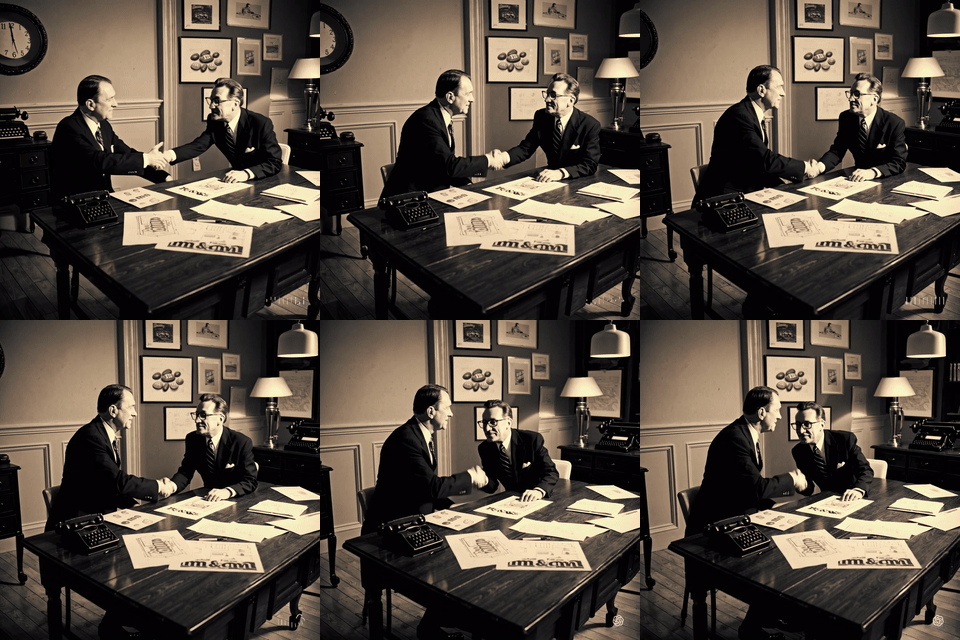
Mars took notes, packed up that idea, and marched it straight back to the U.S. Just in time, too — because World War II was about to kick off, and the U.S. military needed a durable, morale-boosting treat that could survive tropical climates and trench pockets. Mars partnered with Bruce Murrie (son of Hershey’s president) — giving birth to the “M” and “M” in 1941 — and together they launched a Newark-based candy factory that would become a military-grade chocolate facility.
But don’t think this was just sugar and whimsy. The operation was an industrial marvel. Hershey supplied the chocolate. Mars perfected the panning process — coating liquid chocolate in multiple layers of sugar inside massive rotating drums. The result: a candy shell so tough it could survive humidity, heat, and a soldier’s boot.
Combat Candy: M&M’s on the Front Lines
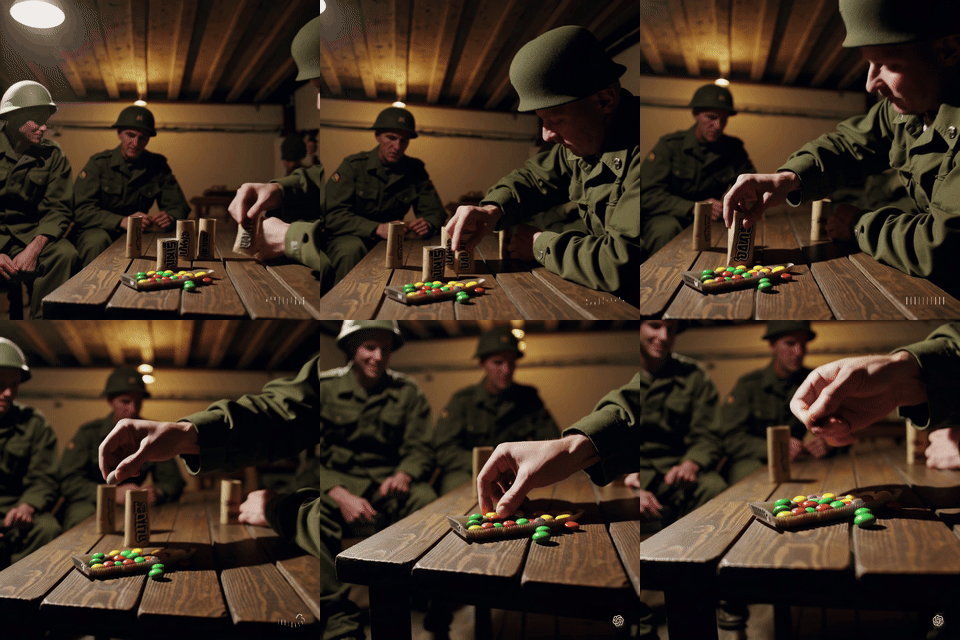
During WWII, M&M’s were issued exclusively to U.S. troops. They weren’t just tasty — they were functional. Packed with calories, sugar, and shelf life, they became part of the soldier’s “D-ration” kits.
To the weary GI:
- They even became a form of makeshift currency — traded between troops or shared with locals.
- M&M’s were a bite of home when home felt galaxies away.
- They were a sugar-fueled boost during long marches and longer firefights.
One Army morale study even cited chocolate as essential for troop happiness. Because, let’s face it: if you’re going to be knee-deep in mud with bullets flying past your head, you deserve some freaking candy.
After the war, returning soldiers were already addicted — emotionally and literally — and Mars wasted no time scaling production for the civilian market. By 1947, M&M’s were flying off store shelves and into American hearts.
Color, Crisis, and Corporate Drama
As peacetime America chewed its way through postwar prosperity, M&M’s became not just popular — they became cultural icons. But no candy empire is without its scandals.
- In 1976, red M&M’s were banned due to a nationwide panic over Red Dye No. 2, thought to be a carcinogen. Never mind that M&M’s didn’t actually use that dye. The Mars Company yeeted red off shelves anyway, just to be safe.
- Cue a 10-year red M&M drought. Fans wrote letters. Urban legends swirled. Children of the ‘80s didn’t even know red M&M’s once existed — until their glorious comeback in 1987, which honestly should’ve had its own parade.
When Candy Got a Personality
Then came the real marketing flex: The M&M’s characters. You’ve seen them — Red (cocky, bossy), Yellow (dopey, lovable), Green (sultry and sassy in go-go boots), Blue (cool jazz guy), Brown (bookish girlboss). It was Pixar meets sugar capitalism — and it worked.
These anthropomorphized candies:
- Starred in Super Bowl ads.
- Sparked internet fan theories.
- Got embroiled in political Twitter storms (yes, really, Green’s boots caused a media meltdown in 2022).
- And most importantly? Sold the hell out of candy.
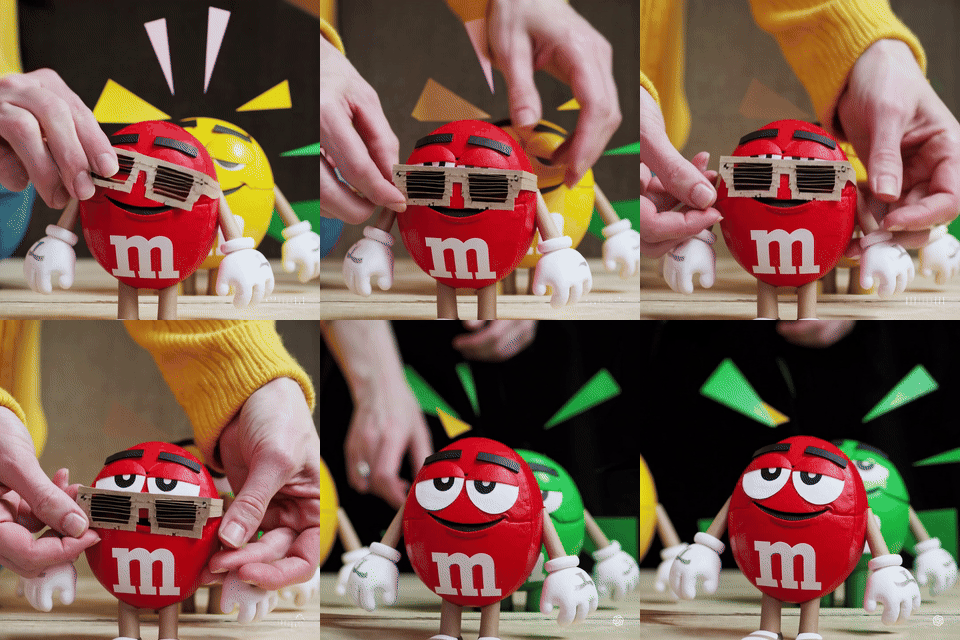
Red and Yellow became the chocolate Abbott and Costello of modern branding. You weren’t just buying candy — you were buying into a cast of characters. Who knew chocolate could have a personality disorder and a publicist?
🌍 M&M’s Go Global — With a Twist
Peanut M&M’s dropped in 1954 (wrapped in yellow for no-nonsense branding), and the rest is international snack diplomacy. M&M’s now have:
- Wasabi and matcha versions in Japan
- Dulce de leche in South America
- Spicy Korean strawberry milk in Asia
- And more flavors than Taylor Swift has eras
Each market gets a taste that feels local — but with the universal language of melt-proof joy.
Why M&M’s Still Matter
In a world that moves at algorithm speed, there’s something oddly comforting about the consistency of M&M’s. Sure, the flavors change. The characters evolve. The red comes, the red goes. But what other candy can claim it:

- Fought in a war
Survived a cancer panic - Starred in marketing campaigns better than some Netflix series
- And still tastes like childhood, even in a post-GMO, TikTok-scrolling, oat-milk-drinking world?
Back when we fought wars with chocolate in our pockets and trusted cartoons to sell us candy… we accidentally built an empire — one crunchy color at a time.
References
- Smithsonian Magazine: How M&M’s Became the Chocolate of War
- NPR: “The Return of the Red M&M”
- Mars, Inc. corporate archives
- The Emperors of Chocolate by Joël Glenn Brenner
- U.S. Army Quartermaster Museum: WWII Rations & Morale
 BACK WHEN WE