“No one ever forgets a toy that made him or her supremely happy as a child, even if that toy is replaced by one like it that is much nicer.”
– Stephen King, The Eyes of the Dragon
Back When We… Played With Real Toys
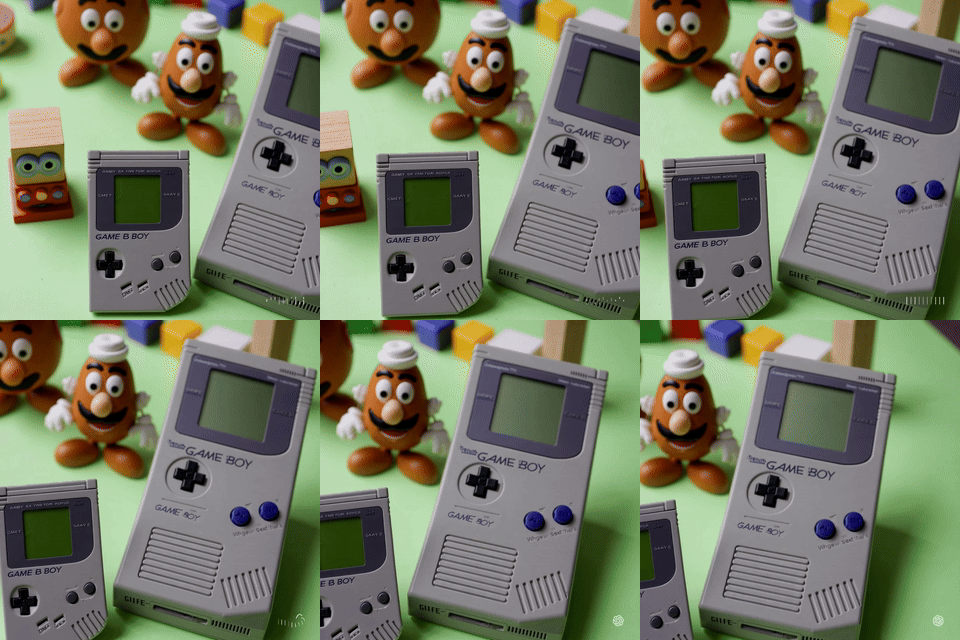
Let’s hop on a time-traveling tricycle and pedal our way through the generations—back to when Saturday morning cartoons ruled the airwaves, your biggest investment was a pack of trading cards, and the phrase “battery not included” was basically a threat.
In this gloriously nostalgic trip, we’ll uncover the top 5 toys that lit up childhoods from the Baby Boomers to the Millennials. Each pick is backed by history, sales records, and a whole lotta playground drama. Let’s get into it.
👶 The Baby Boomers (Born 1946–1964)
When Toys Were Made of Metal, Imagination, and Mild Danger
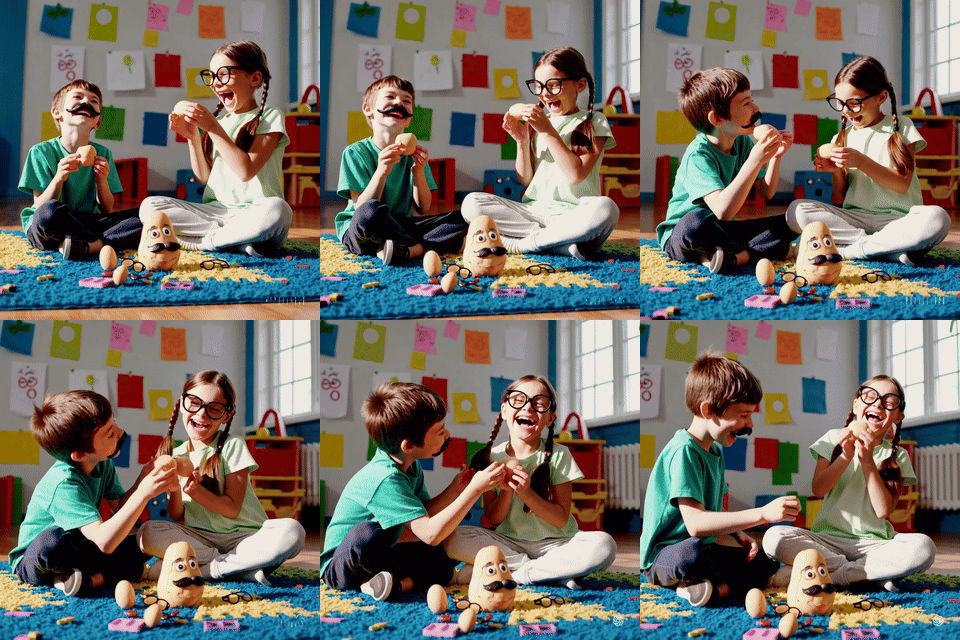


Mr. Potato Head (1952)
Yes, before he was a Toy Story superstar, Mr. Potato Head was literally a collection of plastic facial features you stabbed into a real potato. Hasbro smartly introduced a plastic body in 1964 after parents grew tired of moldy vegetables rolling around their homes.
🔍 Fun Fact: It was the first toy ever advertised on television [Smithsonian Magazine].
Hula Hoop (1958)
Wham-O sold 25 million hula hoops in just four months. It was cheap, wildly addictive, and could be weaponized during recess.
📈 Reference: Wham-O company records and Time magazine archives.
Rock ‘Em Sock ‘Em Robots (1964)
Red Rocker vs. Blue Bomber—robotic violence never looked so fun. This toy scratched the aggression itch without anyone losing a tooth.
🧠 Cultural Note: Its popularity mirrored America’s fascination with sci-fi and boxing.
Chatty Cathy (1960)
The second most popular doll after Barbie in the early ’60s, Chatty Cathy “spoke” using a pull-string voice box. She had over a dozen phrases, all delivered in a slightly haunted tone.
Lincoln Logs (introduced earlier but peaked in Boomer era)
Invented by John Lloyd Wright (yes, son of Frank Lloyd Wright), these wooden logs were the gateway drug to architecture—or at least elaborate squirrel hotels.
Generation X (Born 1965–1980):
The Cassette-Wielding, Bike-Riding, Snack-Without-Supervision Generation.
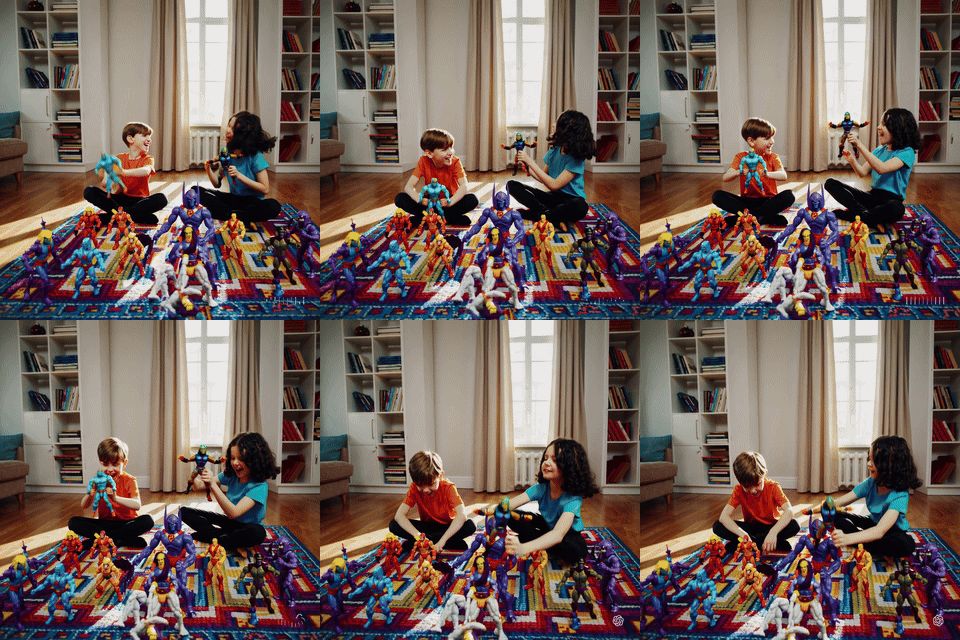
Atari 2600 (1977)
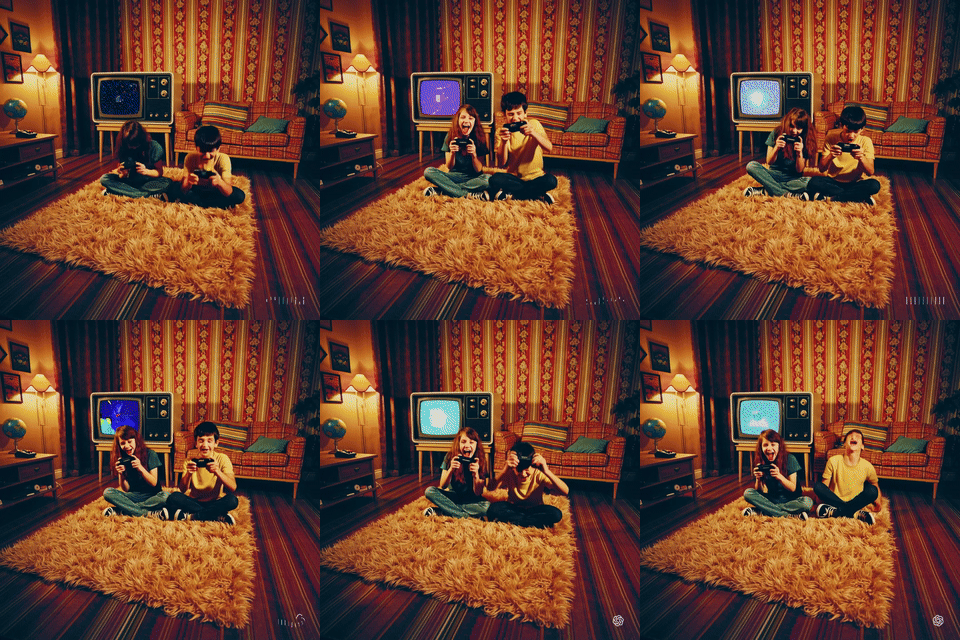
- This was the mic drop of home entertainment. Games like Pong and Space Invaders turned kids into couch-bound thumb warriors.
- 🎮 Sold over 30 million units—arguably the first truly mass-market home console [IGN, 2021].
Rubik’s Cube (1980)
- Invented by Hungarian professor Ernő Rubik, this maddening plastic brain teaser sold 350 million units and caused untold numbers of rage quits and existential crises.
- 🧠 World Cube Association now hosts global competitions for speedcubers.
Star Wars Action Figures (1978 onward)
- Kenner’s 3.75-inch plastic heroes came with tiny guns and massive marketing power.
- 💰 Original Darth Vader with telescoping lightsaber? Worth thousands today.
Easy-Bake Oven (1963, Gen X version in the ‘70s-’80s)
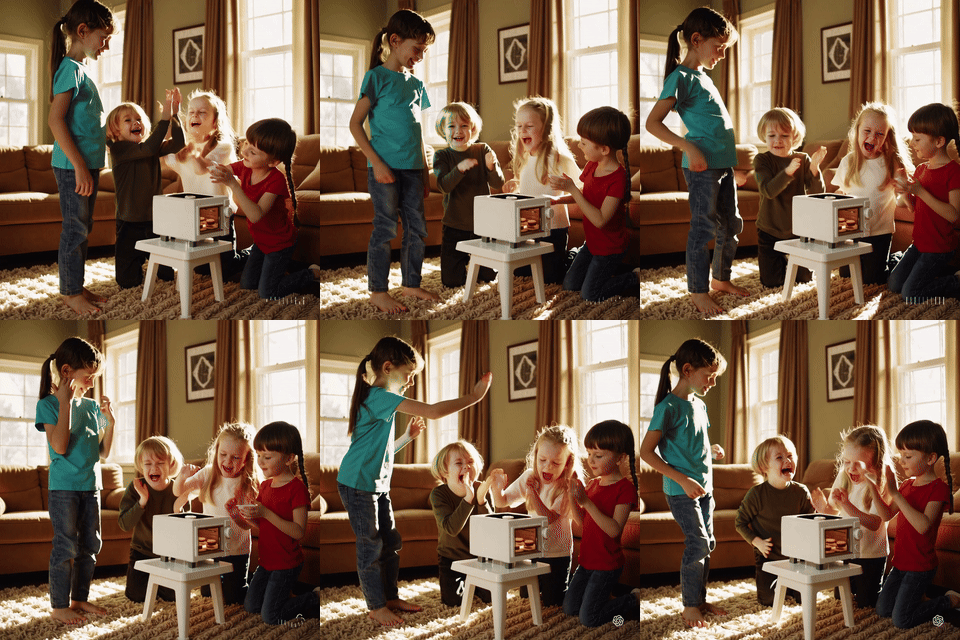
- Baking under a light bulb was peak science. Brownies, cakes, and, occasionally, small house fires.
- 🍰 Yes, Gen X made desserts before the term “air fryer” was invented.
He-Man and the Masters of the Universe (1982)
- Action figures with bulging biceps and moral lessons—because nothing says ethics like a man in furry underwear shouting “I HAVE THE POWER!”
Millennials (Born 1981–1996):
The Pokémon-Collecting, Tamagotchi-Raising, AOL-Starting Pack

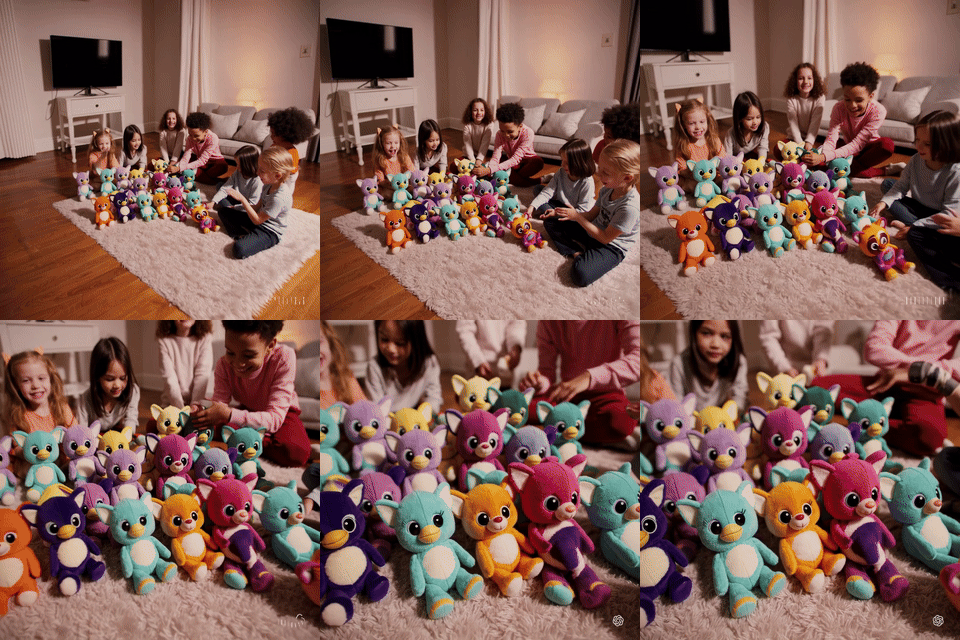

Tamagotchi (1996)
- Japan’s digital pet phenomenon arrived and instantly burdened children with anxiety, responsibility, and the trauma of a virtual pet’s death-by-neglect.
- 💀 If your Tamagotchi died at school, you weren’t alone. Bandai sold over 82 million units.
Game Boy (1989, peak ‘90s)
- With its greenish screen and endless AA battery requirements, Game Boy made Tetris, Pokémon, and squinting in the backseat of a car part of the Millennial rite of passage.
- 🎮 Shipped 118 million units, including variants [Nintendo].
Furby (1998)
- The bug-eyed owl-demon hybrid that haunted a generation. Furby “learned” language and occasionally woke up on its own in the middle of the night.
- 👁️ Sales hit 40 million in just three years [Hasbro data].
Beanie Babies (1993 onward)
- The original “toy stonks.” People believed their Princess Diana bear would pay for college. Spoiler: it didn’t.
- 📈 Ty Inc. used artificial scarcity and “retirements” to drive collectors wild.
Polly Pocket (1989–mid-’90s)
- Tiny worlds in pastel clamshells. Barbie’s younger cousin who lived in a compact and had the dexterity of a jellybean.
- 👛 Girls loved the mini-dramas, and so did the vacuum cleaners that devoured them.
🧸 Why This Matters (Besides Making You Want to eBay Your Childhood)
Each generation’s toys weren’t just “stuff to play with.” They reflected the era’s values, tech advances, and anxieties. Boomers had war-inspired playsets and dolls that taught caretaking. Gen X? A bit more independence, a bit more screen time. Millennials? Hyperactive tech meets mass-marketing genius—with some serious digital detoxing needed afterward.
So whether your childhood smelled like Play-Doh, sounded like an 8-bit theme song, or involved begging your parents for “just one more pack” of cards—you, my friend, were part of a beautiful, bizarro toy story.
Back when we played with toys, not TikTok filters. Now excuse me while I go resurrect my Furby. If it hisses at me, I’m blaming you. 🧃👾
References
- Smithsonian Magazine: Mr. Potato Head history
- TIME: History of Hula Hoops
- IGN: History of Atari
- Nintendo Annual Report (2020)
- Bandai Global Sales Data
- Hasbro & Ty Inc. archives
- “Toys That Built America,” History Channel Administration”
 BACK WHEN WE