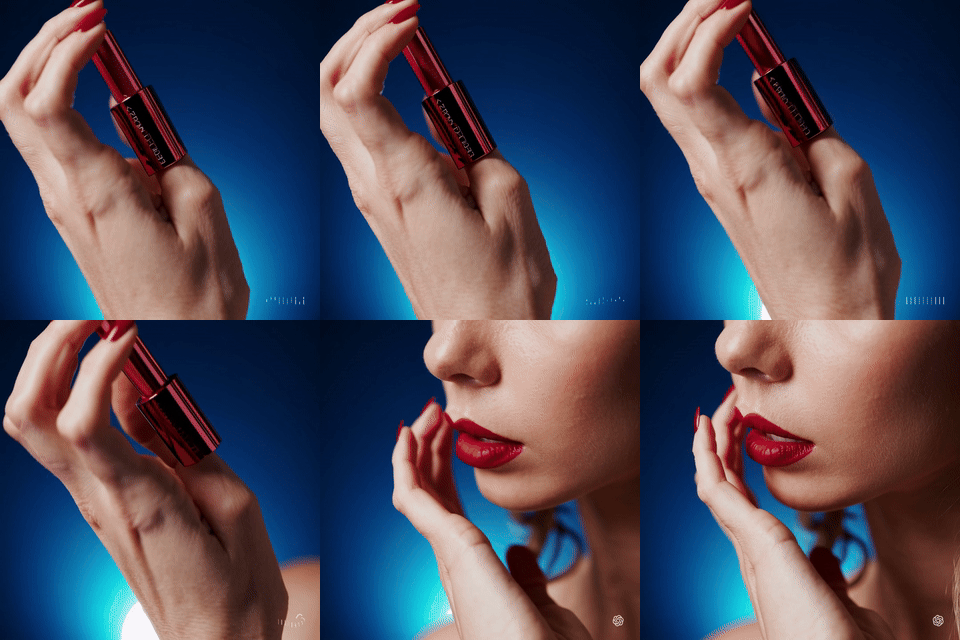
“Luxury is the ease of a t-shirt in a very expensive dress.”– Karl Lagerfeld
From Trunks to Titans of Luxury.
Long before Louis Vuitton handbags were being flexed on Instagram by celebs and crypto bros, the brand’s humble origin lay in something far more practical—luggage. That’s right. The house of Vuitton began not with runway dreams, but with trunks.
1854: The Foundations – Louis Vuitton
Louis Vuitton Malletier was founded in Paris in 1854 by Louis Vuitton, a French craftsman who had gained experience making custom boxes and trunks for the elite. His innovation was deceptively simple: he introduced flat-topped trunks, which were easier to stack than the rounded-top models traditionally used. These trunks were made with durable, waterproof materials and quickly gained popularity among aristocratic travelers.
The brand built its early reputation on quality, craftsmanship, and innovation, rather than luxury for its own sake.

By the time of Vuitton’s death in 1892, the company was already a prestigious name. Under his son Georges Vuitton, the brand expanded internationally and introduced the now-iconic monogram canvas in 1896 to combat counterfeiters.
Moët & Hennessy: The Spirits Side of the Story

In a different part of France, two families had already built storied legacies in fine beverages. Moët & Chandon, founded in 1743, was a dominant name in champagne, while Hennessy, founded in 1765, was the world’s largest cognac producer.
The two merged in 1971 to form Moët Hennessy, seeking strength through consolidation amid growing global demand and increased competition
1987: The Formation of LVMH
The 1980s brought with it a wave of mergers and acquisitions across industries, including in luxury. In 1987, Louis Vuitton and Moët Hennessy merged to form LVMH — a union designed to help both businesses expand internationally and protect against hostile takeovers. The new group was intended to be a holding company with independent brands, maintaining creative autonomy while leveraging shared operational and financial infrastructure.
However, the newly formed conglomerate would soon experience internal strife.

Bernard Arnault and the Power Consolidation
Before becoming the world’s wealthiest man and the kingmaker of global luxury, Bernard Arnault trained not in fashion or finance, but as an engineer. He graduated from the prestigious École Polytechnique in 1971, France’s top engineering school, and joined his father’s construction company, Ferret-Savinel.
Arnault was ambitious. He persuaded his father to sell the construction division and instead pivot into real estate development, renaming the firm Férinel. This real estate business flourished during the 1970s and early 1980s, making Arnault his first small fortune.
But the turning point came in 1984, when he heard that the French government was looking for someone to rescue a failing textile conglomerate, Boussac Saint-Frères — a deeply troubled company that, notably, owned Christian Dior, one of the most recognizable fashion names in France, though it had been languishing for years.
Using $15 million of his own money and backing from Lazard Frères bank, Arnault bought Boussac for a symbolic 1 franc—along with its massive debts. He then stripped down the group, selling off its less profitable divisions like disposable diaper brands and textile manufacturing, and held on tightly to Dior and the department store Le Bon Marché, which he saw as luxury crown jewels.
This move was both controversial and strategic. Critics labeled him a ruthless corporate raider, while supporters praised his ability to extract value from a collapsing industrial relic. What was undeniable: Arnault had entered the luxury world by force, not finesse—and he had no intention of slowing down.
With Dior as his foundation and profits rolling in, he had the resources and credibility to enter a bigger arena. When Louis Vuitton and Moët Hennessy merged in 1987, internal conflicts and weak shareholder structure left the newly formed LVMH vulnerable.
Arnault moved quickly and quietly. Over two years, he acquired a controlling stake in LVMH, often through strategic alliances with other shareholders. In 1989, he ousted the company’s top executives and installed himself as Chairman and CEO. What followed was one of the most aggressive luxury brand acquisition campaigns in corporate history.
1990s–2000s: Strategic Acquisitions and Brand Building
Arnault led LVMH through a massive acquisition spree, focusing on legacy brands with global recognition and potential for high margins. Major acquisitions included:
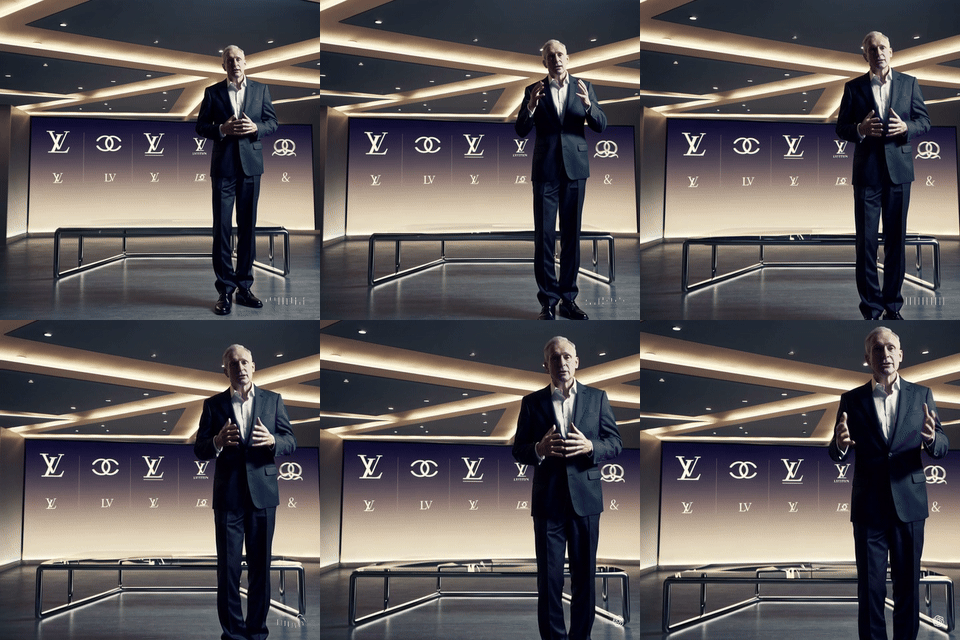
- Christian Dior (although Dior is technically owned by a separate holding company controlled by Arnault, it remains deeply integrated into LVMH’s structure)
- Céline (1996)
- Givenchy (1988)
- Marc Jacobs (1997)
- Loewe, Kenzo, Fendi, Emilio Pucci
- Sephora (1997), which expanded LVMH’s reach into accessible luxury and beauty retail
- TAG Heuer, Hublot, and Zenith in the watchmaking segment
- Bulgari (2011), strengthening its jewelry portfolio
LVMH’s ethos gradually shifted from traditional luxury to a more global, diversified model, balancing heritage with modern branding. They began investing in experiential luxury, such as hospitality (Cheval Blanc hotels), lifestyle (La Samaritaine), and even art and culture (the Louis Vuitton Foundation in Paris).
The LVMH Philosophy: Synergy, Scale, and Star Power
Despite its success, LVMH has faced several controversies and criticisms over the years:
- Geopolitical Issues: As LVMH’s market expanded into China and the Middle East, it had to navigate the complex politics of each region — balancing human rights concerns, censorship laws, and political sensitivities.
- Labor Practices & Sustainability: Like many luxury conglomerates, LVMH has been scrutinized over its supply chain transparency, particularly regarding labor conditions in tanning, textile production, and fast fashion-adjacent lines. While the company has made sustainability pledges — such as LVMH’s LIFE (LVMH Initiatives For the Environment) program — critics argue progress is slow and opaque.
- Cultural Sensitivity and Representation: Brands within the group have faced backlash for cultural appropriation or insensitive campaigns. For example, Dior has faced criticism over some of its ad campaigns, and LVMH has had to reckon with calls for greater diversity both on the runway and within corporate ranks.
- Tax Practices: LVMH has occasionally been mentioned in relation to tax optimization strategies used by multinationals in Europe, although no criminal wrongdoing has been proven.
- Unionization and Labor Rights: In France and Italy, some of LVMH’s subsidiaries have faced protests over wages, working hours, and union representation, particularly in the luxury perfume and cosmetics segments.
2020s and Beyond: Resilience and Reinvention
As of 2024, LVMH is valued at over $500 billion USD, making it the most valuable company in Europe and one of the top in the world. Its portfolio includes 75+ brands across fashion, cosmetics, wines, spirits, jewelry, watches, and hospitality.
Recent developments include:
– A strong digital push, especially post-COVID, as e-commerce and virtual fashion environments grow in importance.
– The 2021 acquisition of Tiffany & Co. for $15.8 billion — the largest luxury acquisition in history.
– Expansion into experiential and lifestyle luxury through investments in hotels, yachts, and even private aviation.

Conclusion: A New Kind of Empire
What began as a trunk-making workshop in 19th-century Paris is now a global empire that defines and dominates modern luxury. LVMH has shaped the industry not just through its brands, but by inventing the playbook for how luxury conglomerates operate.
Its success is a result of smart brand stewardship, strategic centralization, and the vision of a leader who blends artistic direction with ruthless business acumen. But as the industry grapples with sustainability, labor equity, and changing consumer values, LVMH’s next challenge will be proving that luxury can be both aspirational and ethical.
And as the world debates ethics and excess, LVMH simply adjusts its cufflinks — because empires built on champagne and leather don’t lose sleep. 🥂👜👑
References
- LVMH Annual Reports (2020–2023)
- Luxury Strategy by Kapferer & Bastien
- Financial Times, “The Making of LVMH” (2022)
- Bloomberg, “How Bernard Arnault Built the World’s Most Powerful Luxury Group” (2023)
- Reuters, “LVMH, Tiffany and the Future of Luxury” (2021)
- Business of Fashion, “The Evolution of LVMH” (2022)
 BACK WHEN WE