“When diplomacy fails, bring chainsaws and B-52s.”-Everyone at Operation Paul Bunyan, probably
The Most Armed Tree Trimming in History
In the world of military operations, you’ve got your D-Days, your Desert Storms… and then you’ve got Operation Paul Bunyan—where the U.S. military mobilized bombers, battleships, and elite troops to… cut down a tree. Yes, a tree. Not a metaphor. A literal poplar tree. Welcome to the Korean Demilitarized Zone (DMZ), where even forestry becomes a matter of life and death.
🌳 It Started With a Tree… And a Murder
In August 1976, American and South Korean forces set out to trim a poplar tree in the DMZ near the Bridge of No Return—an area jointly patrolled by both North and South Korea. The tree in question blocked the line of sight between a UN checkpoint and an observation post, making it a security concern. A few branches stood between visibility and vulnerability.
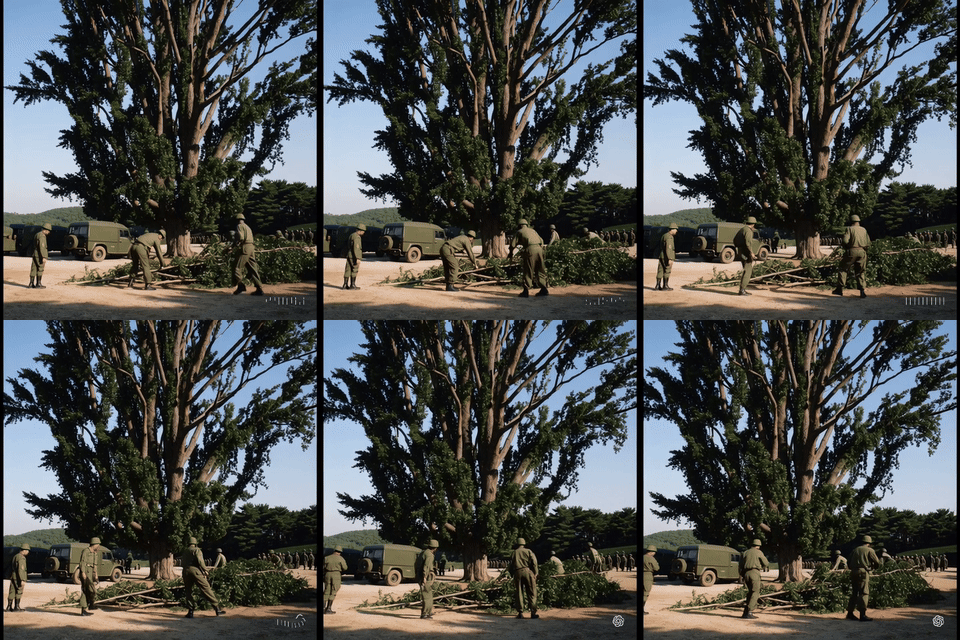
But North Korean soldiers, known for taking their nationalism to an 11/10, were not having it. When a team of U.S. and South Korean soldiers began trimming the tree on August 18, they were attacked by a group of North Korean soldiers, who claimed the tree was planted by Kim Il-Sung himself (of course). The confrontation quickly turned deadly. Two American officers, Captain Arthur Bonifas and First Lieutenant Mark Barrett, were killed—hacked to death with axes.
The incident became known as the “Axe Murder Incident.”
🔥 Operation Paul Bunyan: When You Bring Bombers to a Tree Fight

Three days later, the United States responded in a way that can only be described as: “Hold my chainsaw.“
On August 21, 1976, the U.S. and South Korea launched Operation Paul Bunyan, named after the legendary American lumberjack, to finish trimming the now-infamous tree. But this wasn’t your local park service at work.
What they brought:
– Two 30-man teams of U.S. Army engineers with chainsaws
– A 64-man security platoon armed to the teeth
– 27 helicopters, including Cobra gunships
– B-52 Stratofortresses loaded with bombs circling overhead
– F-4 Phantom II jets in the air, locked and loaded
– South Korean Special Forces in black face paint, ready for combat
– An aircraft carrier group on standby
– Nuclear-capable bombers, just to say, “we could if we wanted to”

It was less a landscaping job and more a tactical flex designed to send one very loud message: “You kill our men, we will annihilate your tree. And possibly your country.”
🌐 A Surprisingly Calm Ending
Despite the absurdity, it worked. The North Korean soldiers watched—quietly. They did not interfere. After about 42 minutes, the tree was reduced to a stump. Mission accomplished.
Shortly after, North Korea issued a statement expressing regret over the deaths—a rare and diplomatically significant gesture. No war, no missiles fired. Just a tree, chopped down under the shadow of strategic overkill.
🧠 Why It Mattered
Operation Paul Bunyan wasn’t just about revenge-trimming. It was about deterrence, projection of power, and controlling escalation without triggering all-out war. It showed North Korea—and the world—that the U.S. could flex military muscle with precision and symbolism.
Also, it forever enshrined a tree as the protagonist in one of the most surreal military dramas in modern history.
FUN FACT
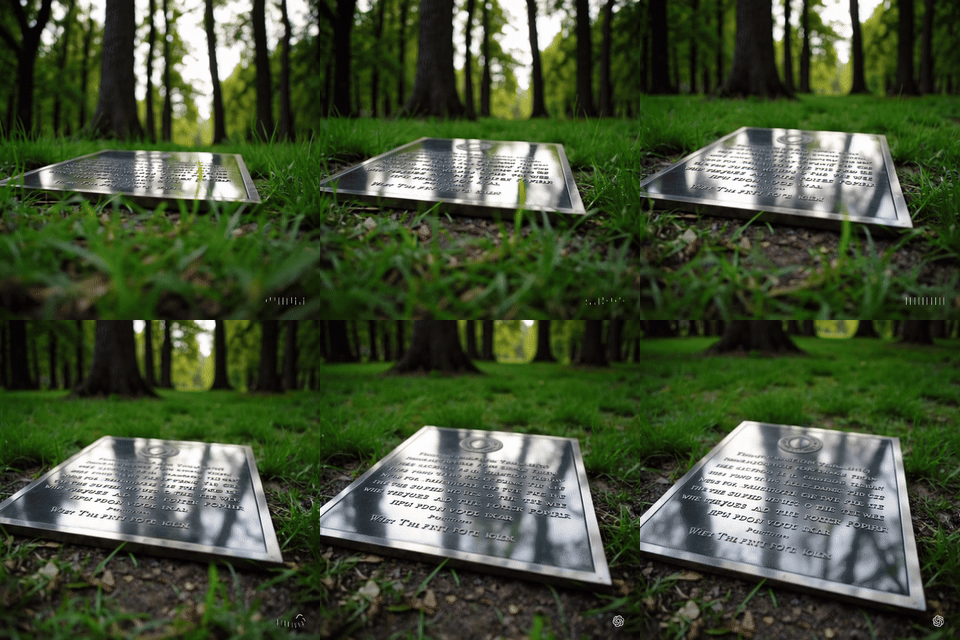
The stump of the infamous poplar was later replaced with a plaque—not a new tree, for obvious reasons. The spot remains a powerful reminder of just how strange geopolitics can get.
Who knew the Cold War could go full lumberjack mode? 🌲✂️
References
- U.S. Army archives
- “The Two Koreas” by Don Oberdorfer
- Declassified military reports on Operation Paul Bunyan)
 BACK WHEN WE